August 12, 2026
How LA County Removed Permitting Friction from Wildfire Rebuild
This 2026 Ivory Prize Finalist launched the LA County Pre-Approved Plans Portal for homes impacted by the 2025 Los Angeles fires.
Canibuild, a 2026 Ivory Prize Finalist, is a proptech platform that streamlines site feasibility analysis, 3D visualization, and zoning compliance for residential real estate. Through accelerating early pre-construction stages, the platform improves project efficiency, which can reduce total project costs and decrease the likelihood of redesigning or abandoning projects. Canibuild supports accessory dwelling units (ADUs), single-family homes, duplexes, triplexes, pools, garages, and other small residential structures.
The devastation left in the wake of the January 2025 wildfires that swept through Los Angeles County within days of each other is well known. The Palisades Fire moved through 23,707 acres along the coast, destroying 6,831 structures and claiming at least a dozen lives. The Eaton Fire burned through the foothills communities of Altadena and Pasadena, leaving similar devastation in its wake. Tens of thousands of residents were displaced in a matter of days.
When the fires stopped, families were left with so many questions. The most immediate question was: what can I rebuild, and how do I start?
The Hidden Barrier in Disaster Recovery
After a disaster, families want one thing: to rebuild and get home. What catches most of them off guard is how hard it is just to find out whether they're allowed to. What they can build on a piece of land depends on zoning, setbacks, lot coverage, and overlay rules.
Usually, one can work through all of that with an architect or a planning consultant, over weeks of back-and-forth with the permitting office. It's slow and expensive, but it's manageable. After a disaster, that same process arrives at the worst possible time. Someone who just lost their home is now booking consultation after consultation, getting a different answer each time they ask, and waiting months only to learn whether the house they're picturing can legally stand where their old one did.
Pre-approved plan programs were built to ease exactly this. A jurisdiction puts together a catalogue of designs that have already passed review and pairs it with a faster approval path, so the distance between "I want to rebuild" and "I have a permit" gets a lot shorter.
However, there's a catch. Most of these programs still ask homeowners to work out which designs actually fit their lot, and that's the part almost no one can do without a professional. So the catalogue sits there, full of approved homes, and a family still can't tell which ones are theirs to build.
Well, good news! That's finally changing.
LA County x Canibuild Pre-Approved Plans Portal
In December 2025, the Los Angeles County Department of Regional Planning and Canibuild launched the LA County Pre-Approved Plans Portal. It is a free, public-facing tool designed to give fire-affected homeowners a direct, guided path to understanding their rebuild options.
For design professionals like architects, plan designers, and licensed preparers, it provides them with a submission pathway to contribute pre-approved standard plans to the county's growing catalogue. Each plan is reviewed and included for homeowner access.
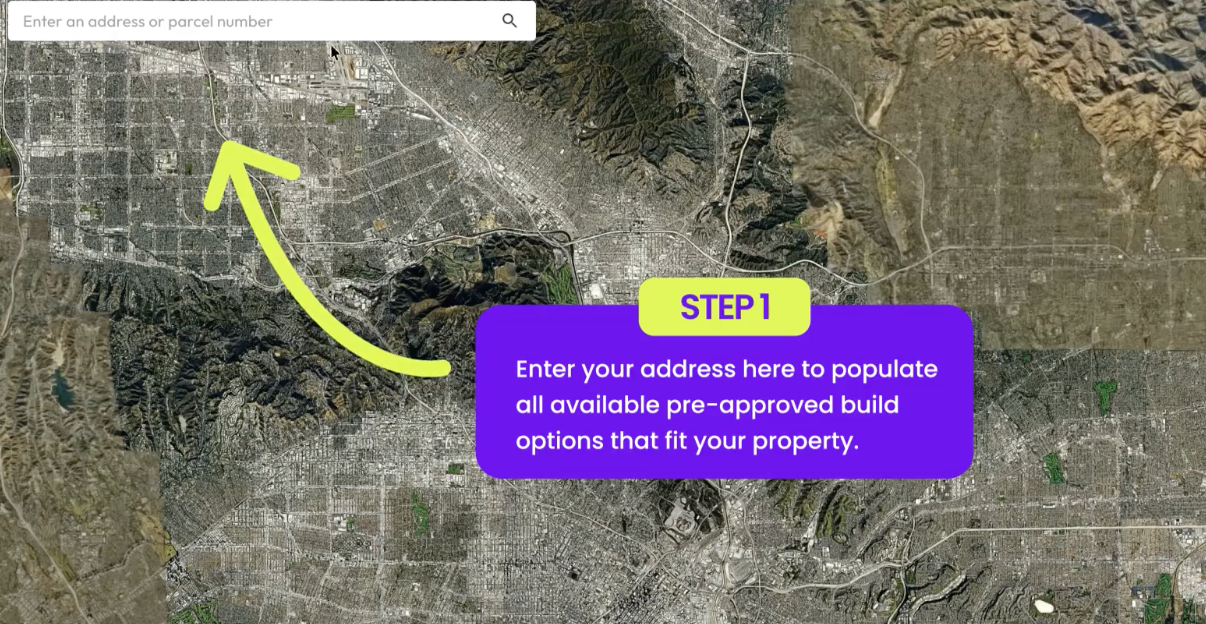
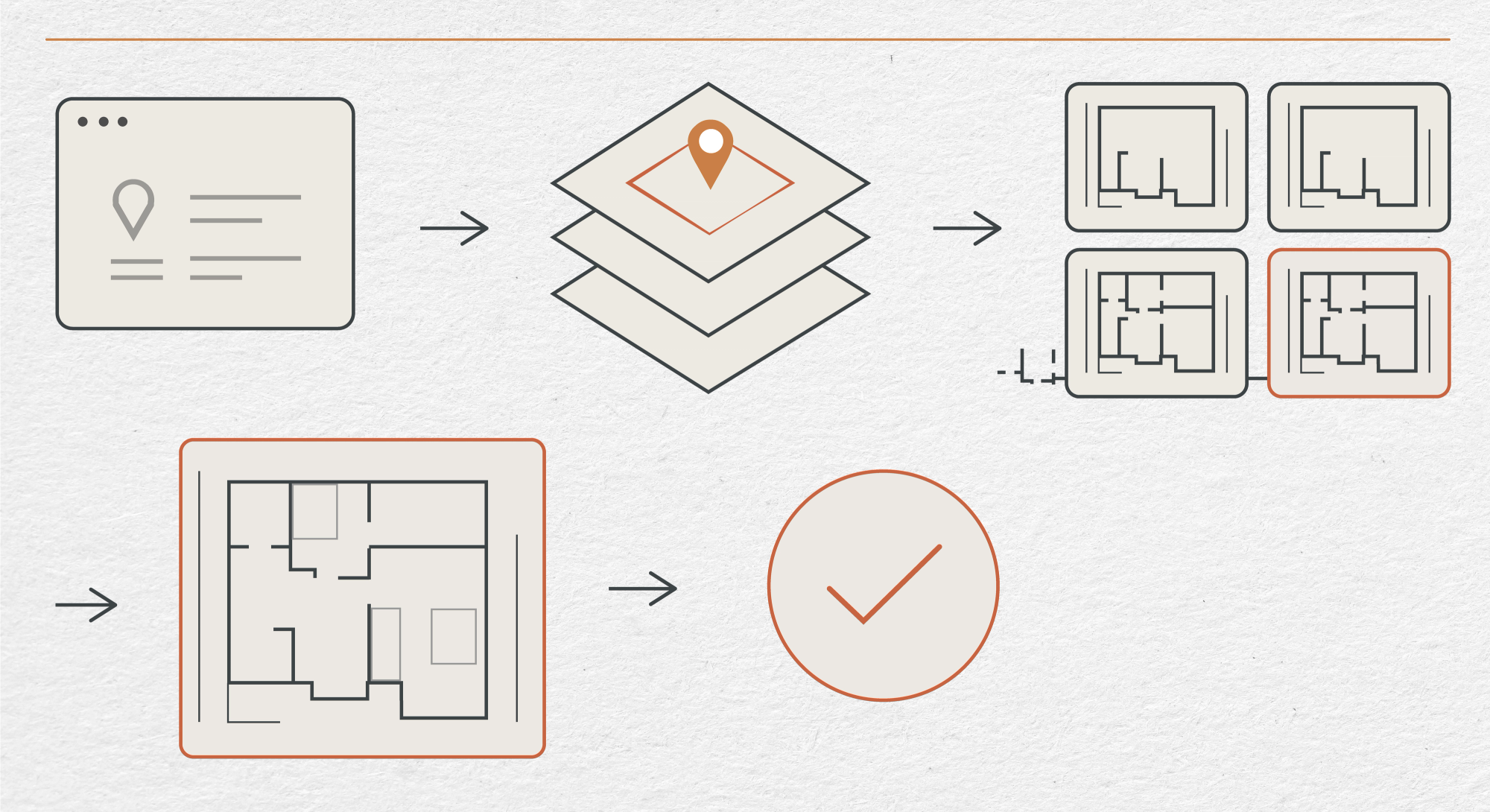
For homeowners, it provides a lot-specific experience. A resident types in their address and within seconds, the portal loads their parcel boundary, pulls the applicable zoning rules, setbacks, hazard designations, and site constraints specific to their property. Then it filters the catalogue to show only the plans that are compatible with their lot.
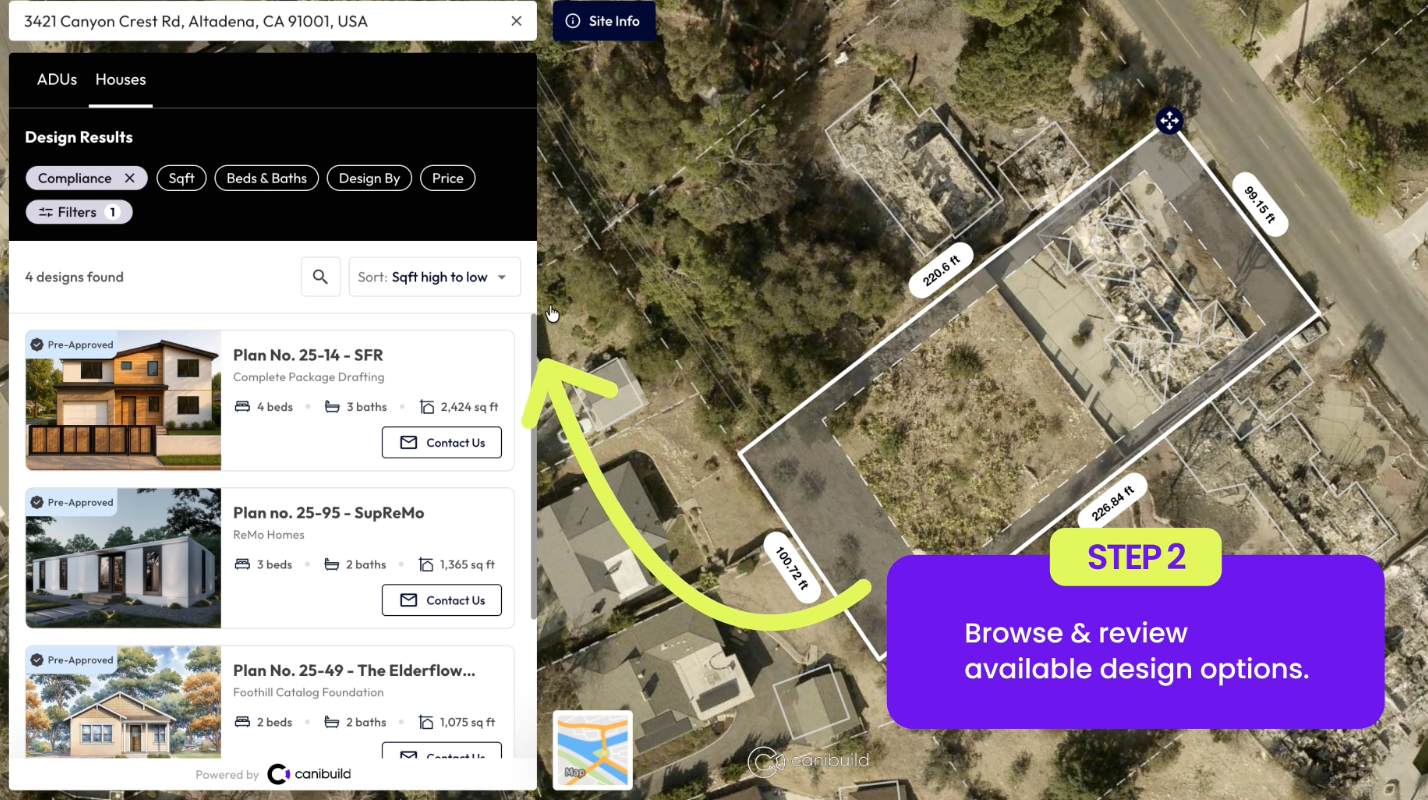
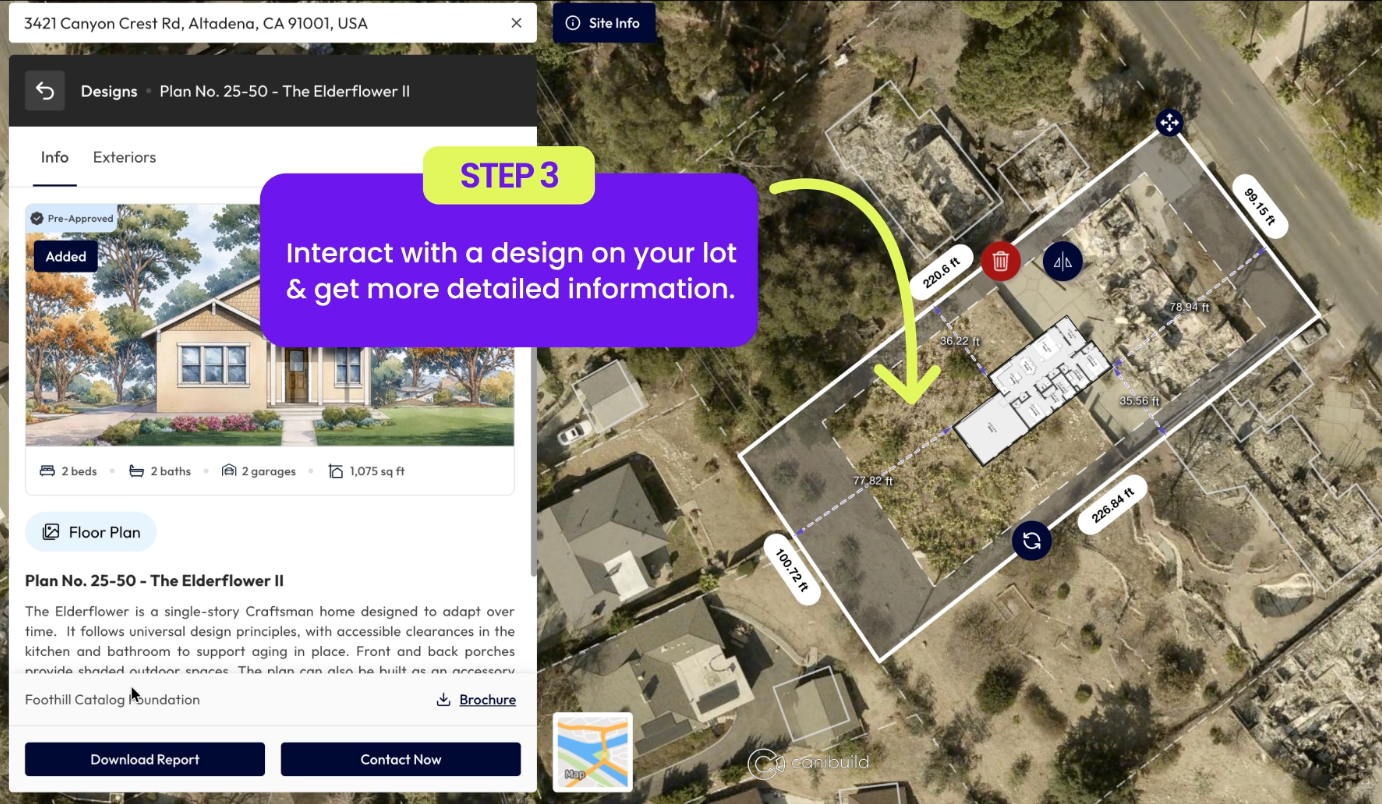
The homeowners can then download a free multi-page zoning pre-check report, providing a documented starting point for conversations with plan owners, design professionals, and county staff.
Free to homeowners at every step, the platform removes the first and often most paralyzing step in the rebuild journey: understanding what is possible. A homeowner no longer needs to hire someone simply to answer the threshold question. They can arrive at that answer themselves, in minutes, and enter the formal process already oriented, with a plan in hand that has already passed regulatory review.
“For families rebuilding after the fires, clarity is everything. Pre-approved plans are powerful, but their real impact comes when homeowners can instantly see what fits their lot and meets zoning rules. That’s what Canibuild brings to Los Angeles County.”— Timothy Cocaro, Founder & CEO, Canibuild
The Numbers Behind the Portal
Launched on December 1, 2025, the portal has grown from 60 pre-loaded plans at launch to 130 pre-approved designs today, contributed by design professionals and reviewed by LA County for code compliance. Rebuild applications using pre-approved plans have grown from just two at launch to 142, and as of August 2026, 113 permits have been issued.
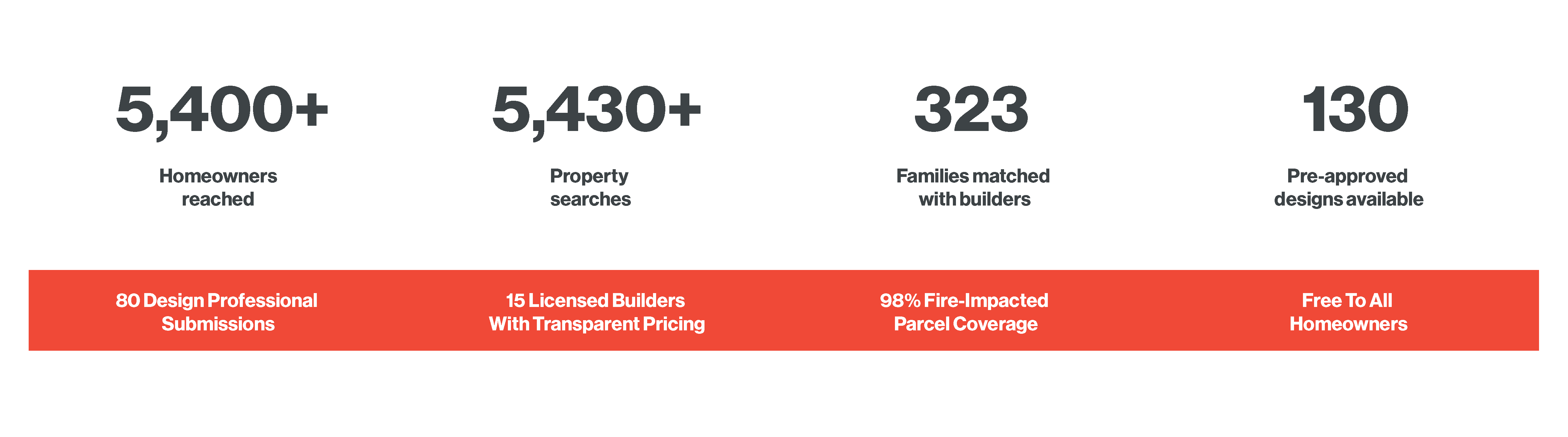
Each builder match is a household moving from uncertainty to a concrete conversation. The portal is part of a broader effort to accelerate rebuilding across Los Angeles County, where residents can also track overall permitting activity through the County's Permitting Progress Dashboard.
Zoe Axelrod, Senior Regional Planner at LA County Planning, described the portal as a “free tool that helps homeowners understand what can be built on their property instantly.”
Free.
Instant.
Property-specific.
Three things that disaster recovery permitting almost never is.
Purpose-Built for Housing Acceleration
While the LA County initiative was created in response to a specific disaster, its significance reaches well beyond disaster recovery assistance. Housing shortages and affordability pressures are pushing cities everywhere to approve more housing faster, disaster or not. The same friction that slowed down fire survivors trying to rebuild is already slowing down ADU applications, infill projects, and housing production mandates in cities across the country.
The combination of pre-approved plans, instant parcel-specific guidance, and automated rule-checking offers a model other jurisdictions can adapt to their own planning frameworks. The same rules that answer a resident's question also power the review behind it. Governments can give residents a trusted answer about their options from day one and give reviewers a submission that's already been checked against those rules before it ever reaches their desk.
Technology cannot replace the judgment of planners, architects, or local governments, but it can eliminate avoidable uncertainty, cut the repetitive work of checking the same rules by hand, and help agencies keep up during periods of extraordinary demand.
Any department fielding repeat "what can I build here" calls, working through an ADU backlog, or trying to hit a state housing production mandate is running into some version of the same friction LA County solved for fire survivors.
The partnership between Los Angeles County and Canibuild demonstrates that rebuilding can be made more accessible through practical, purpose-built technology that simplifies complex government processes while maintaining planning integrity.